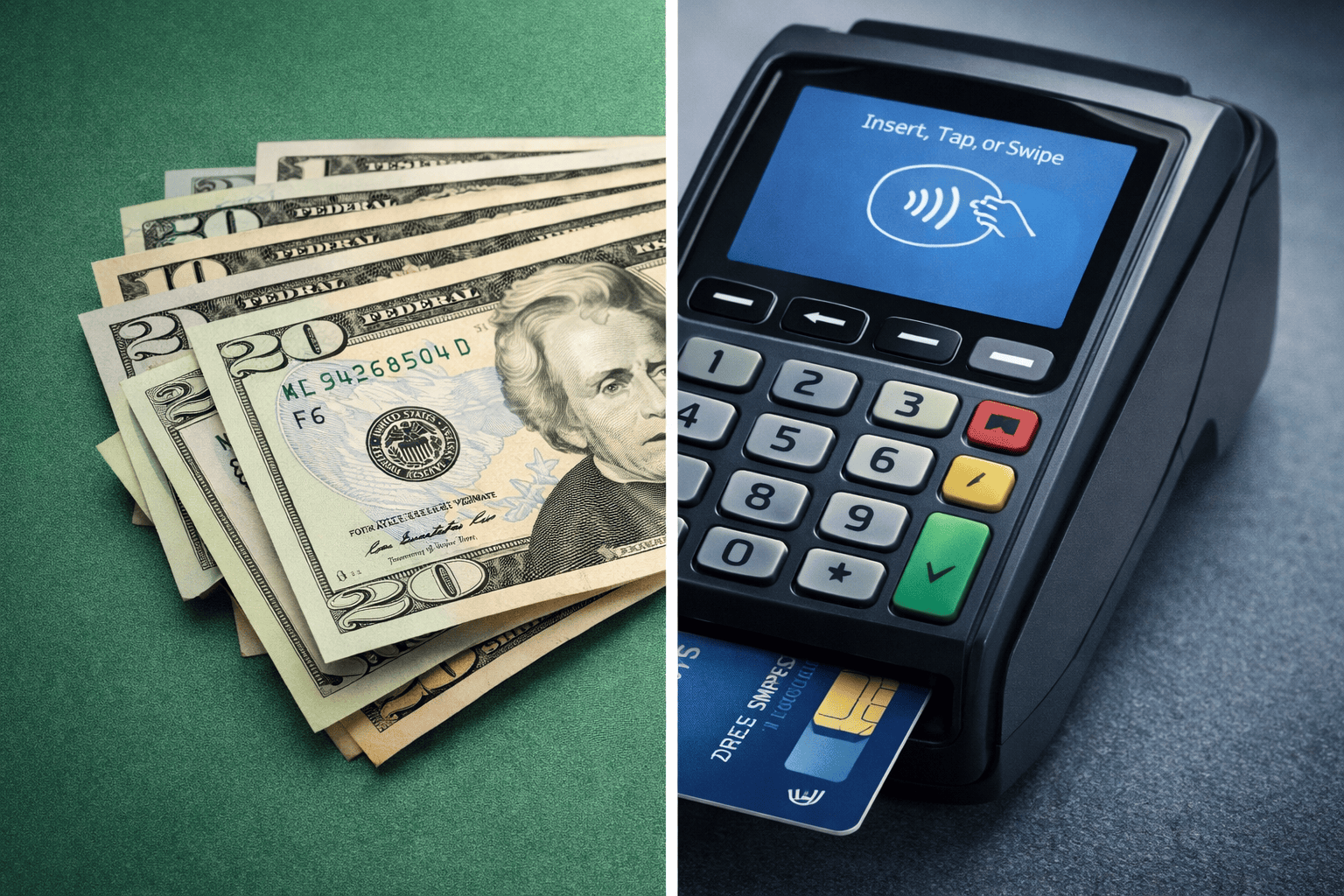
What is a Processor?
Thousands of credit and debit cards exist. As a merchant, you never know what is going to walk through your doors; A Visa debit card, a Mastercard Credit card, American Express, or a rewards card.
Processors act as a hub where all these transactions get processed.
At end of day, they take all those different cards, reaches out to those respective institutions/accounts, pulls funds from those accounts and deposits the money into yours.

- A debit card simply moves money from a customers' bank account to your bank account.
- Credit cards can be thought of as a line of credit or mini-loan. This is money being borrowed with the promise of repayment. Until the lender is repaid in full, they will charge a monthly interest rate.
- AmEx and reward cards are more expensive than a credit card because, in addition to the item or service being purchased, the customer is also getting points, airline miles or some additional benefit. Someone has to pay for these benefits and it is usually you, the merchant.

Why do Fees Seem so High?
There is a bottom where card companies cannot take their rates any lower because it becomes unprofitable. However, there is almost an unlimited amount of points, bonuses, miles and other rewards to entice a consumer. As card companies compete, more and more reward cards enter the market.
The more reward cards on the market, they more benefits that need to be paid for, the higher the fees.
I don't want to pay for someone else's vacations!
And who can blame you! You've sold them a good or service and you should be fairly compensated. That doesn't mean you also need to help their family get to Maui.
This is where programs such as Surcharging and Cash Discounting (also called Dual Pricing) come into play.
These programs pass on the credit card fees you would normally pay, to the customer.
You get the money for your goods or services. If your customer wants to earn rewards, you should not be stuck with the bill.
Smarter Payment Solutions for Every Industry

Flexible Payment Processing
Accept Payments—Your WayFrom mobile payments to full POS integration, accept credit, debit, and contactless payments on any device—anywhere your business goes.

Online Invoicing & Recurring Billing
Get Paid Faster, Automatically
Send branded invoices, set up automatic recurring payments, and accept secure card-not-present transactions with ease.

eCommerce & POS Integrations
Launch or integrate your online store with ease. Our payment tools connect with your website, POS, and accounting platforms for seamless syncing.

Gift & Loyalty Programs
Drive Repeat Business with Rewards
Offer branded gift cards, custom loyalty points, and referral incentives to keep customers engaged and coming back.

Healthcare Payments
Simplify Patient Billing & Practice Operations
Provide patients with easy ways to pay—online, in-person, or via recurring plans. Perfect for dental offices, clinics, and medical practices.

ACH & eCheck Transfers
Low-Cost Bank Transfers Made Easy
Securely accept or send one-time and recurring ACH payments from customers, clients, or business partners—right from your dashboard.
Let's Elevate Your POS and Merchant Services Experience
Reach out and discover how our team can streamline your operations today.